The First 10 Minutes: Stop the Damage
Speed protects your floors, your drywall, and your wallet. Work through this list before you do anything else.
- Shut off both supply valves (hot and red, cold and blue) behind the washer.
- If valves are stuck or broken, close the main water shutoff to the house.
- Turn off power to the laundry circuit at the breaker panel.
- Move laundry, baskets, and rugs out of the water immediately.
- Lift furniture legs onto foil or plastic to prevent stain bleed.
- Open windows if outdoor humidity is lower than indoor.
- Photograph everything before you move or mop a single item.
- Call a licensed water restoration team for extraction within the first hour.
Do not run a shop vac on standing water deeper than an inch unless it is rated wet/dry. Do not lift saturated drywall yourself. You may expose hidden mold or live wiring.
The 7 Most Common Washing Machine Flood Causes
- Burst supply hose. Rubber hoses fail at year 5 to 8. Braided stainless lasts longer but still cracks.
- Drain hose disconnect. Vibration walks the hose out of the standpipe mid cycle.
- Clogged drain line. Lint and detergent sludge back water up into the cabinet.
- Pump or seal failure. Internal leaks soak the floor under the unit slowly, then all at once.
- Overflowing tub. A stuck water level sensor keeps filling past capacity.
- Door or gasket leak. Front loaders develop tears in the bellows that spray water sideways.
- Frozen supply line. Common in Frankton garages and unheated utility rooms during winter cold snaps.
Where the Water Actually Goes
Washing machine water does not just pool. It travels. In Frankton homes we typically find damage in these spots:
- Subfloor under the washer pan, often warped within 6 hours.
- Baseboards and drywall on adjacent walls, wicking 12 to 18 inches up.
- Cabinet bases in adjoining mudrooms and kitchens.
- Ceiling drywall below, if the laundry is on an upper floor.
- Insulation in the wall cavity, which holds moisture for weeks.
- HVAC ductwork running under or near the laundry slab.
Second floor laundry rooms are the worst case. A 30 minute leak on the upper level can damage three rooms below before anyone notices the ceiling sagging. Watch for these warning signs after any washer event:
- Brown halos on ceiling paint that grow over 24 hours.
- Nail pops along the ceiling drywall seam.
- Door frames that suddenly stick or scrape.
- Musty smell from floor registers when the HVAC runs.
- Hardwood cupping along board edges, even rooms away.
Real Cost Ranges in Frankton
Numbers vary by square footage, category, and materials affected. These are typical Frankton Water Restoration job ranges across central Indiana:
- Emergency extraction and setup: $500 to $1,200.
- Drying equipment, 3 to 5 days: $1,200 to $3,500.
- Antimicrobial treatment for Category 2: $300 to $800.
- Drywall and baseboard replacement, single wall: $600 to $1,800.
- Subfloor repair, 50 to 100 sq ft: $1,000 to $2,500.
- Ceiling repair below an upstairs laundry: $800 to $2,400.
- Full restoration with finish carpentry: $4,500 to $12,000+.
Most claims fall in the $3,500 to $7,500 range when caught within 24 hours. Wait a week and you can double that figure with mold remediation added on. Our full water damage restoration cost breakdown walks through every line item.
Quick Inspection Checklist Every 6 Months
Ten minutes twice a year prevents most of the floods we respond to in Frankton. Walk through this list with a flashlight:
- Squeeze the supply hoses near both ends. Stiff or bulging rubber means replace now.
- Look for rust or green corrosion on the valve stems.
- Check that the drain hose is secured to the standpipe with a zip tie or hose clamp.
- Pull lint from the standpipe opening and run hot water to confirm flow.
- Level the machine. A tilted washer vibrates harder and loosens connections.
- Confirm the floor pan is dry and free of debris.
- Test the leak sensor batteries if you have one installed.
Catching one cracked hose during a routine check saves the average Frankton Water Restoration customer a five figure claim. The math on prevention always wins.
Prevent the Next Flood
- Replace rubber supply hoses every 5 years, braided stainless every 8.
- Install a single lever shutoff valve behind the washer.
- Add a leak detection sensor with auto shutoff ($150 to $400 installed).
- Put a metal drain pan under the unit, plumbed to a floor drain.
- Run the washer only when someone is home and awake.
- Pull the unit forward annually and inspect connections and the floor.
What Professional Restoration Looks Like
- Moisture mapping with infrared cameras and pin meters.
- Truck mounted extraction, 100 to 200 gallons per hour.
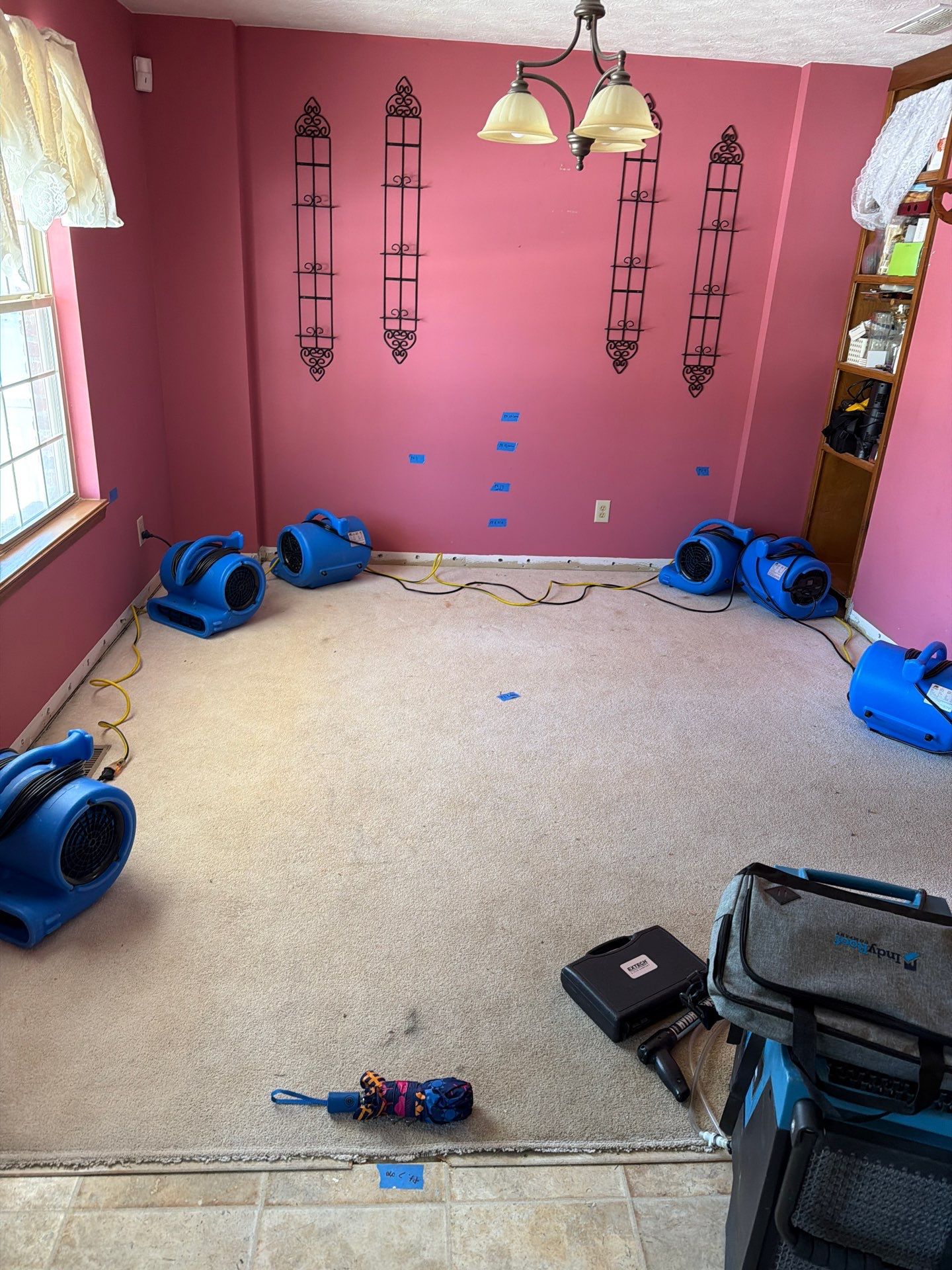
- Air movers placed every 10 to 16 linear feet.
- Commercial dehumidifiers sized to cubic footage.
- Daily moisture logs delivered to you and your adjuster.
- Antimicrobial fogging where Category 2 water touched porous material.
- Controlled demolition of unsalvageable drywall and flooring.
Insurance Claim Language That Works
Use these phrases when you call your carrier. They map directly to covered loss language in most homeowner policies.
- "Sudden and accidental discharge of water from a plumbing appliance."
- "Internal supply line failure, not long term seepage."
- "IICRC certified mitigation underway to prevent secondary damage."
- "Documenting moisture readings and category determination on site."
Avoid the word "flood" with your adjuster. Flood means rising surface water and is a separate policy. A washing machine is a "water discharge" event, which is usually covered.
Have these details ready when you place the call. Adjusters open the file faster when you can answer in one breath:
- Date and time the discharge started and was discovered.
- Source component (supply hose, pump, drain line).
- Approximate square footage affected on each level.
- Name and certification number of your mitigation company.
- Whether power was shut off and the unit is unplugged.
- Photos taken before any items were moved.
IICRC Water Categories: Why It Matters for Your Claim
Restoration pricing and insurance approval hinge on the IICRC water category. Know yours before you talk to the adjuster.
- Category 1 (clean): Supply line break, no contact with soil or sewage. Cleanest scenario.
- Category 2 (gray): Drain water with detergent and soils. Most washer floods fall here.
- Category 3 (black): Sewage backup into the standpipe. Requires full removal protocols.
A clean Category 1 loss that sits 48 hours degrades to Category 2. That is why response time changes the entire scope. For deeper guidance on the cleanup side, see our breakdown of sewage backup cleanup and safe removal when a drain line is involved.
Mistakes That Cost Frankton Homeowners Thousands
- Renting a single home dehumidifier and assuming it is enough.
- Leaving wet carpet pad in place because the top feels dry.
- Painting over stained drywall without testing moisture behind it.
- Skipping the wall cavity drying and finding mold in 90 days.
- Filing the claim a week late and losing the "sudden" argument.
- Hiring an unlicensed handyman who lacks IICRC drying certification.
- Tossing damaged materials before the adjuster documents them.
- Accepting a verbal scope without a written drying plan.
If you want to vet contractors before signing anything, our guide on how to choose a water damage company near you covers the questions that filter out the bad actors.